
MAJOR PROGRAMMES IMPLEMENTED BY SACRED
MAJOR PROGRAMMES IMPLEMENTED BY SACRED
1. INTEGRATED COMMUNITY DEVELOPMENT PROJECT
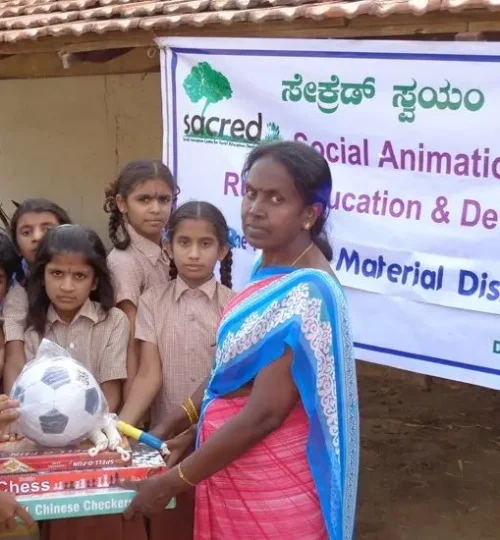
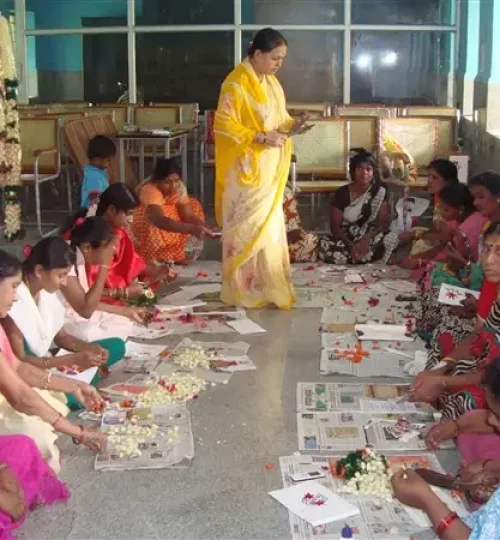
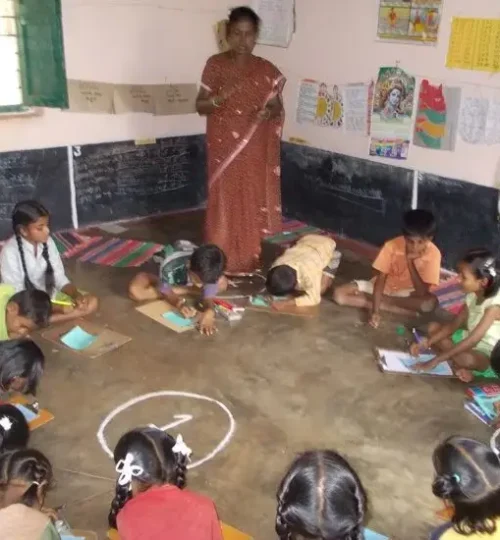
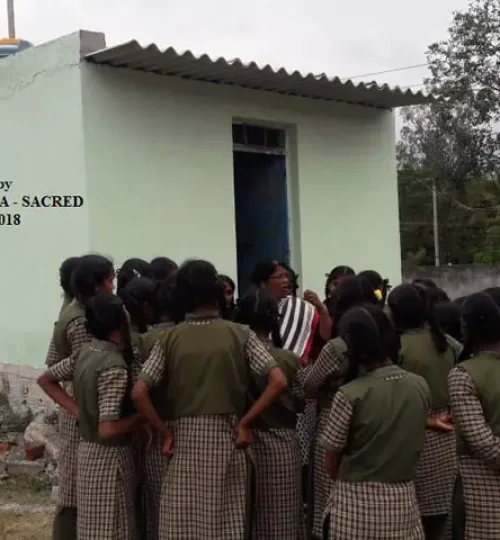
Under the South-Central India Network for Development Alternatives (SCINDeA) network, the Integrated Community Development Project is being implemented in 30 villages in Ramanagara District in Karnataka with an integrated approach for the overall development of the community. Our target group is small & marginal farmer women, & children, men, and youths. The programme focuses on a wide range of integrated activities on sustainable agriculture, health, child development, women and youth development, sustainable environments and improved socio-economic initiatives for the families reeling under poverty through household and community-based approaches. The direct benefit for families is 2500, and the directed benefit is 5000.
Name of the Donor: Supported by SCINDeA Network, Yelagiri Hills.
Project Duration Period: November 2008 to October 2011
No. of Beneficiaries Covered: 22,800
No. of Villages Covered: 30 villages covered in 9 Panchayaths (D, Palya, Darapura, Shivegowdanadoddi, Madapura, Kempanahalli, Aralimaradoddi, Basavanapura, Chunchuga, Guddadhahalli, Lakkanadoddi, Kenchanakuppe, Thammannadoddi, Megaladoddi, Narasegowdanadoddi, Thumbenahalli, Achuludoddi, Halmala, Hosurdoddi, Chakkaredoddi, Kaveridoddi). Anjanapura, Chikkenahalli, Alemaradoddi, Kumbapuracoloney, Mothersabdoddi, Ebellenahalli, Melehalli, Bannikuppe and Belugumba.
2. EMPOWERMENT OF SMALL AND MARGINALIZED FARMERS
Promote low-external-input sustainable agriculture practices among small & marginalised farmers in order to ensure improved soil fertility for better yield & income and food availability in the SACRED area of operation.
90 small & marginalised farmers will be assisted to be involved in low-cost sustainable agriculture practices from the area of operation by 2014.
SACRED implemented a comprehensive sustainable agriculture programme aimed at improving the livelihoods of small and marginal farmers while promoting environmentally sustainable farming practices.
The programme began with the development of clear selection criteria to identify eligible small and marginal farmers. Village survey formats were designed and used to assess existing agricultural practices, understand local challenges, and shortlist beneficiaries. A farmers’ committee was established at the NGO level to oversee, monitor, and guide programme implementation.
Project staff received intensive training on sustainable agriculture concepts and techniques to ensure effective field-level support. Subsequently, shortlisted farmers were sensitised on the differences between conventional farming and sustainable agricultural practices, helping them understand the long-term environmental and economic benefits of sustainable farming.
Farmers participated in a series of training programmes covering four key modules of sustainable agriculture. Specialised training was also provided on vermiculture, bio-fertiliser preparation, and composting techniques, enabling farmers to reduce dependence on chemical inputs and improve soil health.
To promote agroforestry and natural soil enrichment, seeds and saplings were distributed to farmers, encouraging them to plant trees along farm boundaries for green manure, biodiversity conservation, and environmental protection. Exposure visits were organised to successful sustainable agriculture initiatives, allowing farmers to learn firsthand about best practices and their benefits.
Throughout the programme, systematic records and registers were maintained both at the NGO and farmer levels to monitor progress and ensure accountability. Good practices, success stories, and lessons learned were documented to facilitate knowledge sharing and replication of successful sustainable agriculture models in other communities.
As a result, participating farmers enhanced their knowledge and adoption of sustainable agricultural practices, contributing to improved soil fertility, reduced input costs, environmental conservation, and increased resilience to climate change.
Name of the Donor: Supported by SCINDeA Network, Yelagiri Hills.
Project Duration Period: November 2011 to October 2020
No. of Beneficiaries Covered: 25000
No. of Villages Covered: 38 villages from 13 Panchayaths (D, Palya, Darapura, Shivegowdanadoddi, Madapura, Aralimaradoddi, Basavanapura, Guddadhahalli, Thumbenahalli, Achuludoddi, Halmala, Hosurdoddi, Chakkaredoddi, Anjanapura, Chikkenahalli, Kumbapuracoloney, Mothersabdoddi, Bannikuppe, Hombegowdanadoddi, Hebbakodi, Thimmaiyanadoddi, Nijiyappanadoddi, Danayakanapura, Thirumalegowdanadoddi, Channegowdanadoddi, Talawadi, Lakkaojanahalli, Hosadoddi, Kempegowdanadoddi, Lakkapanahalli, Kadankuppe, Sebkatte, Sabkere, Thammanayakanahalli, Javalageredoddi, Dasegowdanadoddi, Dasarahalli, M.G. Palya, Vaddaradoddi).
3. LOW CARBON FARMING PROJECT
The Fair Climate Network is a pioneer in Low Carbon Farming (LCF). LCF aims to incentivise or reward efforts of small and marginal farmers to adopt sustainable agriculture (SA) practices with carbon revenues. LCF is an approach to promote small and marginal farmers to abandon HEIDA (high external input destructive agriculture) and adopt sustainable agriculture. LCF also leads to increased yield, decreased input costs and an improved price for the produce.
LCF contributes to the traditional understanding of sustainable agriculture as a healthy balance between crops, trees, animals and people. The LCF package of practices involves concepts of precise fertiliser application, abandoning the use of synthetic pesticides, improving soil carbon stocks through reduced tillage, anaerobic composting, using organic fertilisers, mulching, intercropping, multi-cropping, planting fuel, fodder and fruit trees, and protecting those that are already there on the farms.
Through balanced nitrogen management, SA can lead to nitrous oxide emission reductions. Excess nitrogen residues, which are usually the case with mainstream fertiliser-intensive plots, are emitted as N₂O in optimum moisture conditions and aeration. Nitrous oxide is known to be 310 times more potent as a GHG than CO₂.. N₂O emissions can be converted to CO₂ equivalents and sold as carbon credits.
At SACRED, we have carried out N2O emission measurements on Ragi for three years in the experimental plots at Nijiyappanadoddi. This plot boasts of being the first in the coalition to have completed three-year measurements on rainfed Ragi systems. Surendra, the farmer of Nijayyappanadoddi, and his family have been working with us in this endeavour. Results show that by adopting sustainable practices, farmers could reduce the input cost by 30% compared to mainstream fertiliser-intensive farming. We have measured yield benefits ranging from 16 to 50%. It must be noted that even during a drought year, the yields were sustained. The measured emission reductions will translate into carbon revenue of 500 to 1,000 rupees per acre per season per farmer. The extent of the carbon credits will depend on the amount by which the farmer takes up the package of practices.
Name of the Donor: Supported by ECCO from the Netherlands with the technical support of Fair Climate Network.
Project Duration Period: November 2012 to October 2016
No. of Beneficiaries Covered: 5000 Farmers
No: of Village Covered: 143 Villages from ____________ Panchayaths
1. INTEGRATED COMMUNITY DEVELOPMENT PROJECT
Under the South-Central India Network for Development Alternatives (SCINDeA) network, the Integrated Community Development Project is being implemented in 30 villages in Ramanagara District in Karnataka with an integrated approach for the overall development of the community. Our target group is small & marginal farmer women, & children, men, and youths. The programme focuses on a wide range of integrated activities on sustainable agriculture, health, child development, women and youth development, sustainable environments and improved socio-economic initiatives for the families reeling under poverty through household and community-based approaches. The direct benefit for families is 2500, and the directed benefit is 5000.
Name of the Donor: Supported by SCINDeA Network, Yelagiri Hills.
Project Duration Period: November 2008 to October 2011
No. of Beneficiaries Covered: 22,800
No. of Villages Covered: 30 villages covered in 9 Panchayaths (D, Palya, Darapura, Shivegowdanadoddi, Madapura, Kempanahalli, Aralimaradoddi, Basavanapura, Chunchuga, Guddadhahalli, Lakkanadoddi, Kenchanakuppe, Thammannadoddi, Megaladoddi, Narasegowdanadoddi, Thumbenahalli, Achuludoddi, Halmala, Hosurdoddi, Chakkaredoddi, Kaveridoddi). Anjanapura, Chikkenahalli, Alemaradoddi, Kumbapuracoloney, Mothersabdoddi, Ebellenahalli, Melehalli, Bannikuppe and Belugumba.
2. EMPOWERMENT OF SMALL AND MARGINALIZED FARMERS
Promote low-external-input sustainable agriculture practices among small & marginalised farmers in order to ensure improved soil fertility for better yield & income and food availability in the SACRED area of operation.
90 small & marginalised farmers will be assisted to be involved in low-cost sustainable agriculture practices from the area of operation by 2014.
SACRED implemented a comprehensive sustainable agriculture programme aimed at improving the livelihoods of small and marginal farmers while promoting environmentally sustainable farming practices.
The programme began with the development of clear selection criteria to identify eligible small and marginal farmers. Village survey formats were designed and used to assess existing agricultural practices, understand local challenges, and shortlist beneficiaries. A farmers’ committee was established at the NGO level to oversee, monitor, and guide programme implementation.
Project staff received intensive training on sustainable agriculture concepts and techniques to ensure effective field-level support. Subsequently, shortlisted farmers were sensitised on the differences between conventional farming and sustainable agricultural practices, helping them understand the long-term environmental and economic benefits of sustainable farming.
Farmers participated in a series of training programmes covering four key modules of sustainable agriculture. Specialised training was also provided on vermiculture, bio-fertiliser preparation, and composting techniques, enabling farmers to reduce dependence on chemical inputs and improve soil health.
To promote agroforestry and natural soil enrichment, seeds and saplings were distributed to farmers, encouraging them to plant trees along farm boundaries for green manure, biodiversity conservation, and environmental protection. Exposure visits were organised to successful sustainable agriculture initiatives, allowing farmers to learn firsthand about best practices and their benefits.
Throughout the programme, systematic records and registers were maintained both at the NGO and farmer levels to monitor progress and ensure accountability. Good practices, success stories, and lessons learned were documented to facilitate knowledge sharing and replication of successful sustainable agriculture models in other communities.
As a result, participating farmers enhanced their knowledge and adoption of sustainable agricultural practices, contributing to improved soil fertility, reduced input costs, environmental conservation, and increased resilience to climate change.
Name of the Donor: Supported by SCINDeA Network, Yelagiri Hills.
Project Duration Period: November 2011 to October 2020
No. of Beneficiaries Covered: 25000
No. of Villages Covered: 38 villages from 13 Panchayaths (D, Palya, Darapura, Shivegowdanadoddi, Madapura, Aralimaradoddi, Basavanapura, Guddadhahalli, Thumbenahalli, Achuludoddi, Halmala, Hosurdoddi, Chakkaredoddi, Anjanapura, Chikkenahalli, Kumbapuracoloney, Mothersabdoddi, Bannikuppe, Hombegowdanadoddi, Hebbakodi, Thimmaiyanadoddi, Nijiyappanadoddi, Danayakanapura, Thirumalegowdanadoddi, Channegowdanadoddi, Talawadi, Lakkaojanahalli, Hosadoddi, Kempegowdanadoddi, Lakkapanahalli, Kadankuppe, Sebkatte, Sabkere, Thammanayakanahalli, Javalageredoddi, Dasegowdanadoddi, Dasarahalli, M.G. Palya, Vaddaradoddi).
3. LOW CARBON FARMING PROJECT
The Fair Climate Network is a pioneer in Low Carbon Farming (LCF). LCF aims to incentivise or reward efforts of small and marginal farmers to adopt sustainable agriculture (SA) practices with carbon revenues. LCF is an approach to promote small and marginal farmers to abandon HEIDA (high external input destructive agriculture) and adopt sustainable agriculture. LCF also leads to increased yield, decreased input costs and an improved price for the produce.
LCF contributes to the traditional understanding of sustainable agriculture as a healthy balance between crops, trees, animals and people. The LCF package of practices involves concepts of precise fertiliser application, abandoning the use of synthetic pesticides, improving soil carbon stocks through reduced tillage, anaerobic composting, using organic fertilisers, mulching, intercropping, multi-cropping, planting fuel, fodder and fruit trees, and protecting those that are already there on the farms.
Through balanced nitrogen management, SA can lead to nitrous oxide emission reductions. Excess nitrogen residues, which are usually the case with mainstream fertiliser-intensive plots, are emitted as N₂O in optimum moisture conditions and aeration. Nitrous oxide is known to be 310 times more potent as a GHG than CO₂.. N₂O emissions can be converted to CO₂ equivalents and sold as carbon credits.
At SACRED, we have carried out N2O emission measurements on Ragi for three years in the experimental plots at Nijiyappanadoddi. This plot boasts of being the first in the coalition to have completed three-year measurements on rainfed Ragi systems. Surendra, the farmer of Nijayyappanadoddi, and his family have been working with us in this endeavour. Results show that by adopting sustainable practices, farmers could reduce the input cost by 30% compared to mainstream fertiliser-intensive farming. We have measured yield benefits ranging from 16 to 50%. It must be noted that even during a drought year, the yields were sustained. The measured emission reductions will translate into carbon revenue of 500 to 1,000 rupees per acre per season per farmer. The extent of the carbon credits will depend on the amount by which the farmer takes up the package of practices.
Name of the Donor: Supported by ECCO from the Netherlands with the technical support of Fair Climate Network.
Project Duration Period: November 2012 to October 2016
No. of Beneficiaries Covered: 5000 Farmers
No: of Village Covered: 143 Villages from ____________ Panchayaths
4. LOW CARBON RESEARCH PROJECT
People in rural areas of developing countries are often trapped in poverty. They face several challenges to escape this trap, including exposure to unpredictable weather patterns, the absence of institutional insurance and credit facilities, health shocks, and many more. We propose to address several of these constraints in a large-scale research project collecting panel data over the course of at least 6 years. The project launched in
March 2014 aims at providing an integrated view on development that addresses some of the major issues through three major steps:
We propose to conduct two large-scale randomised controlled trials (RCTs) to evaluate some interventions aimed at removing health and investment barriers, while at the same time reducing emissions of greenhouse gases. The first consists of the substitution of highly polluting indoor woodstoves with clean biogas stoves. This has the potential to reduce respiratory problems arising from indoor air pollution. It also
saves about 3.3 t of CO₂ emissions per family per year. The second RCT concerns the effectiveness of low-carbon farming techniques. Such techniques substitute organic fertilisers for chemical ones, manage water on the farm, and give farmers more control over their inputs. This lowers the investment barriers in farming, since costly chemical fertiliser may be too expensive for cash-stripped farmers. It also reduces emissions of
greenhouse gases from agriculture.
Investment decisions by farming households are generally thought to be determined by both preferences and beliefs. For instance, farmers who expect low rainfall for the coming season may be unwilling to invest in fertiliser or may switch from rain-sensitive cash crops to safer subsistence crops. Even if beliefs are correct on average, farmers may still be reluctant to invest large amounts in fertiliser because they are risk-averse, fearing the loss of the investment in case of low rainfall. Or they may be reluctant to invest scarce resources now to reap the fruits of their investment several months later if they discount the future at high rates. The role played by both beliefs and preferences in these types of decisions is not well understood. By systematically measuring preferences and their determinants – as well as beliefs and their correspondence to objective rainfall data – we hope to help make policies aimed at helping farmers more effective.
One of the reasons why farmers may be very risk-averse or myopic in their farming decisions is that generally no institutional mechanisms exist to deal with shortfalls in income. That is, farmers can neither insure the risks they face nor do they have access to credit that could help them smooth shocks after they occur. We thus propose to conduct RCTs offering farmers crop insurance and credit lines. While there is little evidence on credit, index-based insurance has often suffered from low take-up rates where available. In this respect, the measurements from step 2 above will be crucial in determining the causes of failure to take up insurance and to improve communication strategies.
Name of the Donor : Wissenschaftszentrum Berlin für Sozialforschung
[Berlin Social Centre] (WZB)
Project Duration Period: 2014 to October 2017
No. of Beneficiaries Covered: 20,000
No. of Villages Covered: 25 villages from 03 taluks.
The project is piloted in Akkur Village of Ramanagara District. Further, at the end of 2014 and in the beginning of 2015, the project will be undertaken on a large sample of 5000 households covering 20,000 people in 24 selected villages of Ramanagara District. Of them, 8 villages are selected from each of Magadi, Channapatna and Kanakapura taluks. In Magadi Taluk:
1) Biskuru,
2) Sirighanahalli,
3) Bachenahatti,
4) Udukunte,
5) Vishwanathapura,
6) Juttanahalli
7) Kalluru and
8) Rangenahalli;
In Channapatna Taluk:
1) Thimmasandra,
2) Mangadahalli,
3) Kallapura,
4) Byranayakanahalli,
5) Mogenahalli,
6) Makali State Forest,
7) Nayidolle and
8) Belekere.
In Kanakapura Taluk:
1) Banavasi,
2) Kiranigere,
3) Chikkasadanahalli,
4) Dimbadahalli,
5) Ganalu,
6) Hoskote,
7) Kempegowdana Doddi
8) Thattiguppe.
5. MICRO-SCALE CDM BIOGAS
The micro-scale CDM biogas project SACRED is one of the coalition partners of the SCINDeA biogas coalition, which is technically supported by the Fair Climate Network. Under this project, 5000 end users will be identified, and they will build domestic biogas units, and they will access the carbon revenues under clean development mechanisms for their emission reductions. The pre-project validations were done by TÜV Rheinland India Pvt Ltd. The Host Country Approval for this project has been obtained from the Ministry of Environment & and Forests, Government of India. The project has been registered with UNFCCC as a micro-scale CDM biogas project of SACRED. The project is at the stage of construction of the domestic biogas units with the selected end-user families in Ramanagara District. SACRED has constructed 50 biogas units in Doddagangawadi, Hombegowdanadoddi & Chikkagangawadi and Akkur villages in Ramanagara Taluk in Ramanagara District with the support of Fair Climate Network, Bagepalli, Karnataka.
Name of the Donor: SCINDeA Network with the technical support of the Fair Climate Network.
Project Duration Period: 2011
No. of Beneficiaries Covered: 50 Farmers
No. of Villages Covered: 04 Villages from 02 Panchayats
6. EMPLOYABLE VOCATIONAL TRAINING ON TAILORING PROGRAM
SACRED implemented a Women’s Vocational Skill Development Programme to empower women and adolescent girls through market-orientated tailoring and income-generation skills. The programme aimed to train 100 women in advanced tailoring techniques, including embroidery, zigzag stitching, saree kuchu work, and blouse stitching, enabling them to enhance their employability and entrepreneurial opportunities.
The programme primarily targeted poor adolescent girls and women from the project area and surrounding communities who had limited access to livelihood opportunities. Through structured vocational and skill-based training sessions, participants acquired practical knowledge and hands-on experience in various tailoring and garment-making techniques.
As a result of the training, unemployed adolescent girls and women significantly improved their vocational skills and confidence. The programme also introduced participants to appropriate marketing strategies, helping them explore opportunities for self-employment and income generation. By strengthening their technical skills and livelihood capacities, the initiative contributed to improved economic independence, increased household income, and enhanced social empowerment of women in the community.
Name of the Donor: Supported by Fullerton India Credit Company Limited. Now this company is renamed SMFG – India Credit Company.
Project Duration Period: 1st Batch June 2019 to September 2019,
2nd Batch: November 2019 to January 2020,
3rd Batch: February 2020 to June 2020
4th Batch: July 2025 to December 2025
No. of Beneficiaries Covered: 1000
No. of Centres Established: 19 Centres in 08 Districts (Ramanagara, Tumkuru, Gubbi, Sira, Yadagiri, Koppal, Chikkamangalore and Hassan)
1st Batch: Hejjala and Thumbenahalli (100 Beneficiaries)
2nd Batch: Hebbevu, Kanakuppe, Bellavi, CS Pura, Kallambella,
Badavanahalli (300 Beneficiaries)
3rd Batch: Tadabidi, Balichakara, Bewoor, Kukanoor, Donikana,
Jayanagar, Shanthigrama, and Vaddarahalli (400)
4th Batch: Chikkamangalore, Arasikere and Hassan (200 Beneficiaries)
4. LOW CARBON RESEARCH PROJECT
People in rural areas of developing countries are often trapped in poverty. They face several challenges to escape this trap, including exposure to unpredictable weather patterns, the absence of institutional insurance and credit facilities, health shocks, and many more. We propose to address several of these constraints in a large-scale research project collecting panel data over the course of at least 6 years. The project launched in
March 2014 aims at providing an integrated view on development that addresses some of the major issues through three major steps:
We propose to conduct two large-scale randomised controlled trials (RCTs) to evaluate some interventions aimed at removing health and investment barriers, while at the same time reducing emissions of greenhouse gases. The first consists of the substitution of highly polluting indoor woodstoves with clean biogas stoves. This has the potential to reduce respiratory problems arising from indoor air pollution. It also
saves about 3.3 t of CO₂ emissions per family per year. The second RCT concerns the effectiveness of low-carbon farming techniques. Such techniques substitute organic fertilisers for chemical ones, manage water on the farm, and give farmers more control over their inputs. This lowers the investment barriers in farming, since costly chemical fertiliser may be too expensive for cash-stripped farmers. It also reduces emissions of
greenhouse gases from agriculture.
Investment decisions by farming households are generally thought to be determined by both preferences and beliefs. For instance, farmers who expect low rainfall for the coming season may be unwilling to invest in fertiliser or may switch from rain-sensitive cash crops to safer subsistence crops. Even if beliefs are correct on average, farmers may still be reluctant to invest large amounts in fertiliser because they are risk-averse, fearing the loss of the investment in case of low rainfall. Or they may be reluctant to invest scarce resources now to reap the fruits of their investment several months later if they discount the future at high rates. The role played by both beliefs and preferences in these types of decisions is not well understood. By systematically measuring preferences and their determinants – as well as beliefs and their correspondence to objective rainfall data – we hope to help make policies aimed at helping farmers more effective.
One of the reasons why farmers may be very risk-averse or myopic in their farming decisions is that generally no institutional mechanisms exist to deal with shortfalls in income. That is, farmers can neither insure the risks they face nor do they have access to credit that could help them smooth shocks after they occur. We thus propose to conduct RCTs offering farmers crop insurance and credit lines. While there is little evidence on credit, index-based insurance has often suffered from low take-up rates where available. In this respect, the measurements from step 2 above will be crucial in determining the causes of failure to take up insurance and to improve communication strategies.
Name of the Donor : Wissenschaftszentrum Berlin für Sozialforschung
[Berlin Social Centre] (WZB)
Project Duration Period: 2014 to October 2017
No. of Beneficiaries Covered: 20,000
No. of Villages Covered: 25 villages from 03 taluks.
The project is piloted in Akkur Village of Ramanagara District. Further, at the end of 2014 and in the beginning of 2015, the project will be undertaken on a large sample of 5000 households covering 20,000 people in 24 selected villages of Ramanagara District. Of them, 8 villages are selected from each of Magadi, Channapatna and Kanakapura taluks. In Magadi Taluk:
1) Biskuru,
2) Sirighanahalli,
3) Bachenahatti,
4) Udukunte,
5) Vishwanathapura,
6) Juttanahalli
7) Kalluru and
8) Rangenahalli;
In Channapatna Taluk:
1) Thimmasandra,
2) Mangadahalli,
3) Kallapura,
4) Byranayakanahalli,
5) Mogenahalli,
6) Makali State Forest,
7) Nayidolle and
8) Belekere.
In Kanakapura Taluk:
1) Banavasi,
2) Kiranigere,
3) Chikkasadanahalli,
4) Dimbadahalli,
5) Ganalu,
6) Hoskote,
7) Kempegowdana Doddi
8) Thattiguppe.
5. MICRO-SCALE CDM BIOGAS
The micro-scale CDM biogas project SACRED is one of the coalition partners of the SCINDeA biogas coalition, which is technically supported by the Fair Climate Network. Under this project, 5000 end users will be identified, and they will build domestic biogas units, and they will access the carbon revenues under clean development mechanisms for their emission reductions. The pre-project validations were done by TÜV Rheinland India Pvt Ltd. The Host Country Approval for this project has been obtained from the Ministry of Environment & and Forests, Government of India. The project has been registered with UNFCCC as a micro-scale CDM biogas project of SACRED. The project is at the stage of construction of the domestic biogas units with the selected end-user families in Ramanagara District. SACRED has constructed 50 biogas units in Doddagangawadi, Hombegowdanadoddi & Chikkagangawadi and Akkur villages in Ramanagara Taluk in Ramanagara District with the support of Fair Climate Network, Bagepalli, Karnataka.
Name of the Donor: SCINDeA Network with the technical support of the Fair Climate Network.
Project Duration Period: 2011
No. of Beneficiaries Covered: 50 Farmers
No. of Villages Covered: 04 Villages from 02 Panchayats
6. EMPLOYABLE VOCATIONAL TRAINING ON TAILORING PROGRAM
SACRED implemented a Women’s Vocational Skill Development Programme to empower women and adolescent girls through market-orientated tailoring and income-generation skills. The programme aimed to train 100 women in advanced tailoring techniques, including embroidery, zigzag stitching, saree kuchu work, and blouse stitching, enabling them to enhance their employability and entrepreneurial opportunities.
The programme primarily targeted poor adolescent girls and women from the project area and surrounding communities who had limited access to livelihood opportunities. Through structured vocational and skill-based training sessions, participants acquired practical knowledge and hands-on experience in various tailoring and garment-making techniques.
As a result of the training, unemployed adolescent girls and women significantly improved their vocational skills and confidence. The programme also introduced participants to appropriate marketing strategies, helping them explore opportunities for self-employment and income generation. By strengthening their technical skills and livelihood capacities, the initiative contributed to improved economic independence, increased household income, and enhanced social empowerment of women in the community.
Name of the Donor: Supported by Fullerton India Credit Company Limited. Now this company is renamed SMFG – India Credit Company.
Project Duration Period: 1st Batch June 2019 to September 2019,
2nd Batch: November 2019 to January 2020,
3rd Batch: February 2020 to June 2020
4th Batch: July 2025 to December 2025
No. of Beneficiaries Covered: 1000
No. of Centres Established: 19 Centres in 08 Districts (Ramanagara, Tumkuru, Gubbi, Sira, Yadagiri, Koppal, Chikkamangalore and Hassan)
1st Batch: Hejjala and Thumbenahalli (100 Beneficiaries)
2nd Batch: Hebbevu, Kanakuppe, Bellavi, CS Pura, Kallambella,
Badavanahalli (300 Beneficiaries)
3rd Batch: Tadabidi, Balichakara, Bewoor, Kukanoor, Donikana,
Jayanagar, Shanthigrama, and Vaddarahalli (400)
4th Batch: Chikkamangalore, Arasikere and Hassan (200 Beneficiaries)
7. FREE HEALTH CARE CAMPS IN KARNATAKA
To address the limited access to healthcare services in underserved rural and semi-urban communities, SACRED organised 420 Medical Health Camps with the support of SMFG India Credit Company and Women’s Organisation in Rural Development (WORD). The initiative aimed to bring essential healthcare services closer to vulnerable populations, particularly those facing barriers to accessing regular medical care.
The health camps provided free health check-ups, basic medicines, and primary treatment services to community members. Individuals requiring specialised medical attention were referred to appropriate healthcare facilities for further diagnosis and treatment. In addition, health awareness and hygiene education sessions were conducted to promote healthy lifestyles, disease prevention, and improved sanitation practices.
Through these camps, more than 110,514 beneficiaries, including men, women, children, and elderly persons, received essential healthcare services. The programme significantly increased awareness of personal hygiene, preventive healthcare, and early detection of health issues. It also improved access to medical consultations for residents of remote villages, contributing to better health outcomes and enhanced well-being within the community. The initiative demonstrated the importance of community-based healthcare interventions in reaching underserved populations and promoting equitable access to health services.
Name of the Donor: Supported by Fullerton India Credit Company Limited. Now this company is renamed SMFG – India Credit Company.
8. COVID RELIEF ACTIVITIES
Background: On 11 March 2020, WHO declared the Novel Coronavirus Disease (COVID-19) outbreak a pandemic and reiterated the call for countries to take immediate action and scale up responses to treat, detect and reduce transmission to save people’s lives. Covid-19
continues to spread at a very fast pace and is impacting thousands of individuals across the world. Currently, India is at a stage where there is an exponential increase in the number of coronavirus cases across the country. The government of India is taking proactive measures and making public appeals to encourage public participation in the response to COVID-19 by maintaining social distancing and the nationwide lockdown announced from 24th March 2020 to stop the community transmission. The COVID-19 pandemic has particularly affected most of the community members in our country, especially those surviving on daily wages. Since the lockdown, many folks in the community are struggling to make ends meet, while living with disabilities, chronic
illnesses and/or compromised immune systems and without family support structures. The outbreak of COVID-19 brought a complete halt to the normal life of people in India. The central government has announced a nationwide lockdown for 40 days from March 24 as a prevention effort and to halt the massive spread of the virus. The State Government also swiftly acts in Karnataka to respond to the prevention of Covid-19 by identifying the persons who have the travel history to foreign countries during the latest period, travel history to the other states, persons with the symptoms of the coronavirus and quarantine
them in the hospitals and at their homes; scale up the medical facilities to treat them medically; ensure the social distancing in the community; and execute the contact tracing procedures through the district administration with interdepartmental staff across the state in Karnataka. SACRED, with the support of other NGOs and its volunteers, distributed 21,200 hygiene kits in 53 branches of seven clusters. Each branch received around 400 kits under the guidelines and supervision of the branch manager of the Gramashakthi group; the local leaders were also involved in distributing the kits. Each hygiene kit consists of 1 bath soap, a set of 4 face masks, disinfectant floor cleaner and washing soap. Project activity was planned and implemented with the support of the branch officers from 22nd April 2020 to 9th May 2020 and 14th May 2020 to 20th May 2020 based on the situation of the clusters and permissions. With the help of our staff, volunteers, and other partnered NGOs, we were able to cover around 270 villages and 21,200 beneficiaries across Karnataka.
Name of the Donor: Supported by Fullerton India Credit Company Limited. Now this company is renamed SMFG – India Credit Company.
9. SMART VILLAGE DEVELOPMENT CENTRE AT THUMBENAHALLI VILLAGE
Apna Tech Tree (ATT) – Smart Village Development Centre, Thumbenahalli, Karnataka
The Apna Tech Tree (ATT) – Smart Village Development Centre is a collaborative initiative of Connecting Dreams Foundation (CDF), New Delhi, and Social Animation Centre for Rural Education and Development (SACRED), Karnataka, aimed at transforming rural communities through technology-driven development, digital inclusion, and entrepreneurship promotion. The project focuses on Thumbenahalli village and its surrounding cluster of 11 villages, benefiting approximately 1,500 women and youth directly, while creating a broader impact across the region.
The initiative follows a three-phase sustainable development model designed to bridge the rural-urban digital divide and create pathways for socio-economic growth. In the first phase, Enable (Electronic Connectivity), the project establishes essential digital infrastructure through network and telecommunication connectivity, ensuring that rural communities have access to reliable technological resources. The second phase, Empower (Knowledge Connectivity), focuses on creating knowledge hubs and information centres that provide digital literacy, financial literacy, and skill development training, equipping women and youth with the competencies needed to thrive in a technology-driven economy. The final phase, Develop (Economic Connectivity), leverages technology and acquired skills to promote entrepreneurship, improve livelihoods, increase per capita income, enhance access to healthcare and government services, and foster the social and economic empowerment of women and young people.
By integrating connectivity, knowledge, and economic opportunities, the ATT Smart Village Development Centre catalyses inclusive rural development, enabling communities to become self-reliant, digitally empowered, and economically resilient. The project envisions creating a replicable model of smart village transformation where technology acts as a bridge to education, healthcare, employment, and sustainable community progress.
Name of the Donor: Connecting Dreams Foundation (CDF) _Delhi
7. FREE HEALTH CARE CAMPS IN KARNATAKA
To address the limited access to healthcare services in underserved rural and semi-urban communities, SACRED organised 420 Medical Health Camps with the support of SMFG India Credit Company and Women’s Organisation in Rural Development (WORD). The initiative aimed to bring essential healthcare services closer to vulnerable populations, particularly those facing barriers to accessing regular medical care.
The health camps provided free health check-ups, basic medicines, and primary treatment services to community members. Individuals requiring specialised medical attention were referred to appropriate healthcare facilities for further diagnosis and treatment. In addition, health awareness and hygiene education sessions were conducted to promote healthy lifestyles, disease prevention, and improved sanitation practices.
Through these camps, more than 110,514 beneficiaries, including men, women, children, and elderly persons, received essential healthcare services. The programme significantly increased awareness of personal hygiene, preventive healthcare, and early detection of health issues. It also improved access to medical consultations for residents of remote villages, contributing to better health outcomes and enhanced well-being within the community. The initiative demonstrated the importance of community-based healthcare interventions in reaching underserved populations and promoting equitable access to health services.
Name of the Donor: Supported by Fullerton India Credit Company Limited. Now this company is renamed SMFG – India Credit Company.
8. COVID RELIEF ACTIVITIES
Background: On 11 March 2020, WHO declared the Novel Coronavirus Disease (COVID-19) outbreak a pandemic and reiterated the call for countries to take immediate action and scale up responses to treat, detect and reduce transmission to save people’s lives. Covid-19
continues to spread at a very fast pace and is impacting thousands of individuals across the world. Currently, India is at a stage where there is an exponential increase in the number of coronavirus cases across the country. The government of India is taking proactive measures and making public appeals to encourage public participation in the response to COVID-19 by maintaining social distancing and the nationwide lockdown announced from 24th March 2020 to stop the community transmission. The COVID-19 pandemic has particularly affected most of the community members in our country, especially those surviving on daily wages. Since the lockdown, many folks in the community are struggling to make ends meet, while living with disabilities, chronic
illnesses and/or compromised immune systems and without family support structures. The outbreak of COVID-19 brought a complete halt to the normal life of people in India. The central government has announced a nationwide lockdown for 40 days from March 24 as a prevention effort and to halt the massive spread of the virus. The State Government also swiftly acts in Karnataka to respond to the prevention of Covid-19 by identifying the persons who have the travel history to foreign countries during the latest period, travel history to the other states, persons with the symptoms of the coronavirus and quarantine
them in the hospitals and at their homes; scale up the medical facilities to treat them medically; ensure the social distancing in the community; and execute the contact tracing procedures through the district administration with interdepartmental staff across the state in Karnataka. SACRED, with the support of other NGOs and its volunteers, distributed 21,200 hygiene kits in 53 branches of seven clusters. Each branch received around 400 kits under the guidelines and supervision of the branch manager of the Gramashakthi group; the local leaders were also involved in distributing the kits. Each hygiene kit consists of 1 bath soap, a set of 4 face masks, disinfectant floor cleaner and washing soap. Project activity was planned and implemented with the support of the branch officers from 22nd April 2020 to 9th May 2020 and 14th May 2020 to 20th May 2020 based on the situation of the clusters and permissions. With the help of our staff, volunteers, and other partnered NGOs, we were able to cover around 270 villages and 21,200 beneficiaries across Karnataka.
Name of the Donor: Supported by Fullerton India Credit Company Limited. Now this company is renamed SMFG – India Credit Company.
9. SMART VILLAGE DEVELOPMENT CENTRE AT THUMBENAHALLI VILLAGE
Apna Tech Tree (ATT) – Smart Village Development Centre, Thumbenahalli, Karnataka
The Apna Tech Tree (ATT) – Smart Village Development Centre is a collaborative initiative of Connecting Dreams Foundation (CDF), New Delhi, and Social Animation Centre for Rural Education and Development (SACRED), Karnataka, aimed at transforming rural communities through technology-driven development, digital inclusion, and entrepreneurship promotion. The project focuses on Thumbenahalli village and its surrounding cluster of 11 villages, benefiting approximately 1,500 women and youth directly, while creating a broader impact across the region.
The initiative follows a three-phase sustainable development model designed to bridge the rural-urban digital divide and create pathways for socio-economic growth. In the first phase, Enable (Electronic Connectivity), the project establishes essential digital infrastructure through network and telecommunication connectivity, ensuring that rural communities have access to reliable technological resources. The second phase, Empower (Knowledge Connectivity), focuses on creating knowledge hubs and information centres that provide digital literacy, financial literacy, and skill development training, equipping women and youth with the competencies needed to thrive in a technology-driven economy. The final phase, Develop (Economic Connectivity), leverages technology and acquired skills to promote entrepreneurship, improve livelihoods, increase per capita income, enhance access to healthcare and government services, and foster the social and economic empowerment of women and young people.
By integrating connectivity, knowledge, and economic opportunities, the ATT Smart Village Development Centre catalyses inclusive rural development, enabling communities to become self-reliant, digitally empowered, and economically resilient. The project envisions creating a replicable model of smart village transformation where technology acts as a bridge to education, healthcare, employment, and sustainable community progress.
Name of the Donor: Connecting Dreams Foundation (CDF) _Delhi
